Posts

REAR AXLE

Image
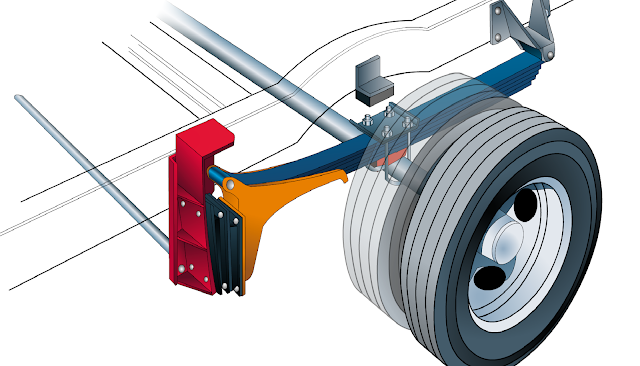
REAR AXLE Construction: It is mostly live axle in commercial vehicles and dead axle in cars. Two half-shafts are used to transmit the power from differential. FORCES ON REAR AXLE 1. Shear stress due to weight of the body 2. Driving Thrust During torque transmission the thrust has to be transmitted to body through frame by radius rod.  3. Torque reaction Torque reaction will be there during torque transmission and braking. This will oppose the propeller shaft rotation causing torsional and bending stress. 4. Side Thrust Side thrust or pull due to side load on the wheel and due to cross winds during cornering. Types of Rear axles Depending upon the method of supporting the rear axles and mounting the rear wheels 1.Semi or non-floating axle 2.Full-floating axle 3.3/4 Floating axle  1.Semi floating axle Half-shaft inner end is splined into the differential and other end is supported by bearing i...
SUSPENSION

Image
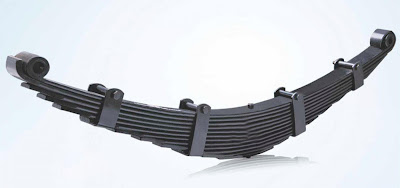
SUSPENSION SYSTEM Parts which are performing the function of isolating the automobile from road shocks(which may be in the form of bounce, pitch, roll or yaw) are collectively called as suspension system.  The suspension system of an automobile is one which separates the wheel/axle Assembly from the body and also maintain the contact between tyre and road surface. It consists of spring and damper. Objectives of Suspension system Prevent the road shocks being transmitted to the vehicle components. To prevent the occupants from road shocks and to give a comfortable ride. To make sure the stability of the vehicle during pitching, rolling and yawing motions. Basic considerations during designing of the springs 1.Vertical loading During bump or pit, it is subjected to tensile compressive and bending loads. These are observed by the elastic compression, shear, bending or twisting of the spring. The front springing system should vibrate with less frequency...